
Taste Basics
Acidity, body and sweetness explained simply
Three simple words can make coffee easier to understand: acidity, body and sweetness. Here is what they mean, how to recognize them, and why none of them is automatically "better".
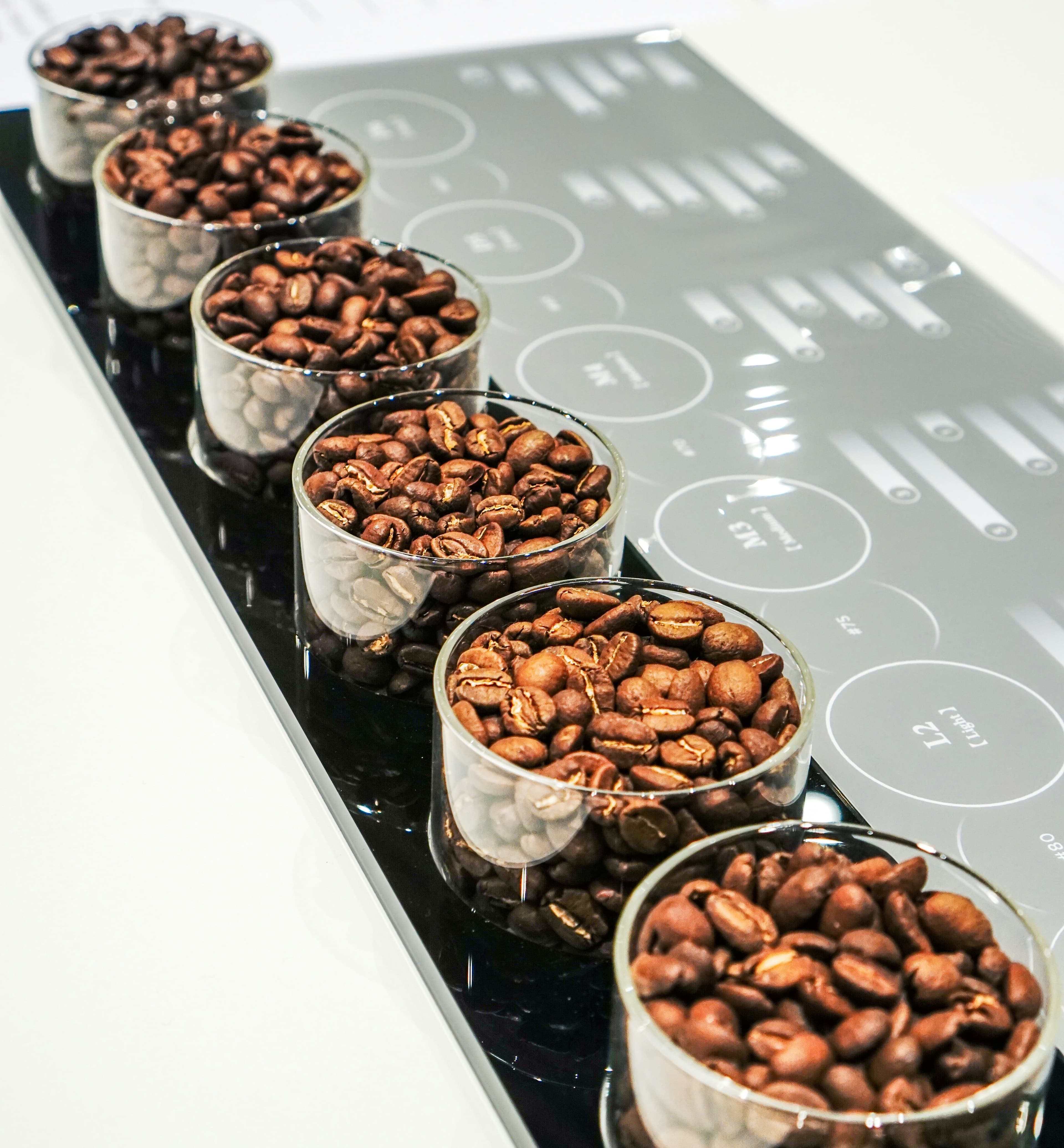
Coffee becomes easier to understand when you have a few reliable words.
Not many. Just enough to describe what is happening in the cup.
For most people, the first useful words are sweetness, acidity and body. They are common in specialty coffee, but they do not need to be used in a technical or intimidating way. They simply help you understand why one coffee feels soft and comforting, another feels bright and lively, and another feels heavy, bitter or tiring.
These words are also part of the language of Bean Luxe Compass. Compass does not treat them as scores or medals. It uses them as signals: ways to understand how you experience coffee and what kind of cup may fit your taste.
The important thing is this: sweetness, acidity and body are not rankings. They are descriptions.
More acidity is not always better. More body is not always better. More sweetness is not always better. What matters is how these elements work together - and how they feel to you.
Sweetness: not sugar, but pleasant roundness
Sweetness in coffee does not mean that the coffee tastes sugary.
A coffee can feel sweet even without sugar. Sometimes it reminds you of caramel, honey, ripe fruit, milk chocolate, dried fruit or brown sugar. Other times, sweetness is less about a specific flavour and more about the overall feeling of the cup: rounded, pleasant, balanced, easy to drink.
Sweetness often helps coffee feel complete.
If a coffee has sweetness, bitterness becomes less aggressive. Acidity feels more pleasant. Body feels softer. The cup gives you the impression that the different parts are working together.
Ask yourself:
- Does this coffee feel naturally pleasant?
- Does it remind me of chocolate, caramel, ripe fruit or honey?
- Does the bitterness feel balanced?
- Would I enjoy at least one sip without adding sugar?
This last question is useful, even if you normally drink coffee with sugar. You are not judging your habit. You are simply checking whether the coffee has some natural roundness before you change it.
Sugar can make sweetness more visible, but it can also amplify what is already wrong. In a balanced coffee, it may make roundness and comfort more evident. In a harsh coffee, it may also make burnt bitterness, roughness or unpleasant aftertaste more noticeable.
So sweetness is not just about adding sugar. It is about whether the coffee itself gives you a sense of pleasant balance.
In Compass language, this is why some coffees may feel soft and mellow, while others may feel less rounded or more demanding.
Acidity: not sourness, but brightness
Acidity is one of the most misunderstood words in coffee.
Many people hear "acidic" and think "sour", "bad" or "aggressive". But in coffee, acidity can also mean brightness, freshness and liveliness.
Think about the difference between a flat drink and a sparkling one. Or between a very sweet biscuit and a fresh apple. That feeling of lift, freshness and energy is close to what acidity can bring to coffee.
A coffee with pleasant acidity may feel:
- bright;
- lively;
- fresh;
- juicy;
- expressive;
- fruit-like.
A coffee with unpleasant acidity may feel:
- sharp;
- sour;
- thin;
- unbalanced;
- uncomfortable.
The difference is not only intensity. It is balance.
This is why acidity should be tasted, not assumed.
A coffee can have an aroma that reminds you of lemon, orange, grapefruit or bergamot. That aroma can make you expect acidity before you drink. But acidity itself is perceived in the mouth, not in the nose.
A citrus aroma is a clue, not proof.
For example, a coffee may smell like orange peel but taste sweet and round. Another may smell floral and delicate, but feel very bright once tasted. Another may have almost no obvious citrus aroma, yet still feel lively in the mouth.
A useful way to slow down is to separate three questions:
- What do I smell?
- What do I taste?
- What do I feel in my mouth?
Instead of saying:
"It smells citrusy, so it is acidic."
try something more precise:
"It reminds me of orange on the nose, but in the mouth it feels sweet, balanced and only gently bright."
That kind of note is much more useful.
In Compass language, acidity can move from very soft and mellow to very bright and complex. None of these levels is automatically better. They simply describe how much brightness and liveliness you tend to enjoy.
Some people want a coffee that feels calm, soft and round. Others enjoy a cup that feels expressive, bright and almost sparkling.
Both preferences are valid.
Body: not strength, but texture
Body is the physical feeling of coffee in your mouth.
It is not the same as intensity. It is not the same as bitterness. It is not simply how "strong" the coffee is.
Body is texture.
Some coffees feel light, almost tea-like. Others feel silky, creamy, dense or heavy. Some disappear quickly from the palate. Others stay longer and feel more present.
Ask yourself:
- Does this coffee feel light or full?
- Is it watery, silky, creamy, round or heavy?
- Does it disappear quickly?
- Does it leave a dense feeling in the mouth?
- Does it feel comfortable or tiring?
Espresso often makes body easier to notice because it is concentrated. Moka can also feel dense and intense, especially with darker roasts. Filter coffee may feel lighter and cleaner, but it can still have body: silky, juicy or structured rather than heavy.
This distinction is important.
A coffee can be full-bodied without being bitter.
A coffee can be intense but thin.
A coffee can be delicate and still have a beautiful texture.
In Compass language, body helps describe whether you prefer a cup that feels light and clean, balanced and rounded, or full and enveloping.
What about intensity?
Intensity deserves its own clarification because many people use it as a shortcut for everything.
When someone says "I like strong coffee", they may mean many different things:
- high bitterness;
- dark roast flavour;
- full body;
- high caffeine perception;
- concentrated espresso;
- long aftertaste;
- a coffee that feels powerful.
But these are not the same thing.
Intensity is the overall force of the cup. It describes how loud the coffee feels. But a loud coffee is not necessarily a good coffee, and a delicate coffee is not necessarily weak.
A coffee can be intense because it is dense and sweet.
A coffee can be intense because it is bitter and burnt.
A coffee can be intense because it is bright, aromatic and complex.
A coffee can be gentle but still very well made.
This is why Compass treats intensity as a preference, not as a quality score.
If you like intense coffee, the useful question is: what kind of intensity do you like?
Do you want deep chocolate and body? Do you want roastiness and bitterness? Do you want aromatic complexity? Do you want something concentrated, like espresso, or something expressive but lighter, like filter coffee?
Once you separate intensity from quality, choosing coffee becomes much easier.
How roast changes what you perceive
Roasting has a major influence on sweetness, acidity, body and aroma.
A lighter roast often preserves more delicate and volatile aromas. These can include floral, citrus-like, fresh fruit or tea-like impressions. Think of aromas that feel high, lifted and easy to lose: jasmine, bergamot, fresh fruit, herbs.
A medium roast often brings more balance between sweetness, acidity and body. It may show fruit, chocolate, caramel, nuts or pastry-like aromas, depending on the coffee.
A darker roast usually emphasizes heavier aromatic families: cocoa, dark chocolate, toasted nuts, spices, black pepper, caramelized sugar, smoke or roastiness. It can also increase the perception of body and reduce the perception of acidity.
This is not automatically negative.
Many people enjoy darker roasts because they feel comforting, dense and familiar. Darker roasting can highlight sweetness and deeper aromas when it is well controlled.
The problem appears when roasting goes too far.
If a coffee is roasted too dark, the roast can start to dominate everything else. Delicate aromas disappear first. Then sweetness may become less clear. Eventually, heavier aromas can also become burnt, dry, smoky or harsh.
At that point, you are no longer tasting depth. You are tasting the effect of excessive roast.
A useful way to think about it is:
- light roast can preserve delicate, volatile aromas;
- medium roast can balance sweetness, acidity and body;
- dark roast can emphasize depth, body and heavier aromas;
- too dark can burn nuance and make different coffees taste similar.
The goal is not to decide that one roast level is always better. The goal is to understand what each roast style makes easier or harder to perceive.
How these elements work together
Sweetness, acidity and body should not be understood separately.
They interact.
A coffee with high acidity and low sweetness may feel sharp.
A coffee with high acidity and enough sweetness may feel juicy and lively.
A coffee with full body, low sweetness and strong bitterness may feel heavy or tiring.
A coffee with medium body, gentle acidity and clear sweetness may feel balanced.
A coffee with light body and clear acidity may feel delicate, fresh and tea-like.
This is why describing coffee with only one word can be misleading.
Saying "this coffee is acidic" is less useful than saying:
"It is bright, but it has enough sweetness to feel balanced."
Saying "this coffee is strong" is less useful than saying:
"It has full body, dark chocolate notes and a long bitter finish."
Saying "this coffee is light" is less useful than saying:
"It has a light body, gentle acidity and a clean aftertaste."
Compass works in this direction: not by asking whether one element is good or bad, but by looking at how different signals create a taste profile.
A simple way to recognize your preference
You do not need to memorize technical definitions. Start from what feels comfortable.
If you like soft and comforting coffee, you may enjoy:
- noticeable sweetness;
- low to medium acidity;
- medium or full body;
- chocolate, caramel, nutty or pastry-like aromas;
- a smooth aftertaste.
If you like lively and expressive coffee, you may enjoy:
- medium to high acidity;
- clear aroma;
- fruit, citrus or floral impressions;
- light to medium body;
- a fresh, clean finish.
If you like dense and intense coffee, you may enjoy:
- fuller body;
- deeper aromas such as cocoa, dark chocolate, spice or roasted nuts;
- lower perceived acidity;
- longer aftertaste;
- intensity that feels round rather than burnt.
If you like clean and delicate coffee, you may enjoy:
- light body;
- gentle sweetness;
- clear acidity;
- tea-like or floral impressions;
- a short but clean finish.
These are not fixed categories. They are starting points.
Your taste may change by time of day, preparation method, mood or context. You may want an intense espresso in the morning and a bright filter coffee in the afternoon. You may enjoy a round moka at home and a more delicate coffee when you have time to focus.
That is normal.
Taste is not a box. It is a map.
There is no perfect profile
The most important thing is not to chase the "best" acidity, the "best" body or the "best" sweetness.
The best coffee for you is not always the coffee with the highest score, the rarest origin or the most complex description.
It is the coffee that makes sense for your palate, your habits and your curiosity.
Sweetness helps you understand comfort.
Acidity helps you understand brightness.
Body helps you understand texture.
Intensity helps you understand how powerful the cup feels.
Together, they give you a language.
And once you have a language, choosing coffee becomes less random.
Bean Luxe Compass was built around this idea: before pointing you toward a coffee, it helps you understand your own taste.
Not to tell you what you should like.
But to help you recognize it when it is in the cup.